Faith Tensions Rise as Gombe Students Demand Equal Worship
 Faith Tensions Rise as Gombe Students Demand Equal Worship
For 14 years, Christian students at the Federal University of Kashere (FUK), Gombe State, have worshipped in temporary and frequently disrupted spaces due to the absence of a chapel despite the presence of multiple mosques across campus. While the university insists it has fulfilled its responsibility by allocating land for a chapel, students and religious leaders say the situation reflects deeper concerns about fairness, inclusiveness, and planning in one of Nigeria’s federal institutions.
When FUK was established in 2011, students arrived expecting an environment that would support both academic and spiritual growth. But Christian students have long found themselves without a stable worship center. The Fellowship of Christian Students (FCS) initially held services at Lecture Theatre FCLT 1, a hall that soon became overcrowded and unsafe as membership grew. Students eventually moved to the Multipurpose Sports Complex, a larger, better-ventilated structure capable of accommodating their numbers.
That arrangement abruptly collapsed when the Multipurpose Hall was locked without prior notice. The university cited renovations and preparations for a public lecture, but the sudden closure triggered online outrage and renewed attention to a decade-old issue. Photographs of the locked building circulated widely on X, prompting comments from users who described the situation as discriminatory. “Christian students…have been suffering since the inception of the school,” one user wrote. “There’s no single chapel for Christian students and lecturers, but there are dozens of mosques on campus.”
ALSO READ: Oklahoma student Says Teacher Failed Her Over Bible Citation
A campus visit confirmed that the institution hosts at least six mosques or designated prayer spaces, including facilities near the Chancellery, library, medical center, postgraduate school, ICT center, and student hostels. In contrast, no Christian-designated worship center exists anywhere on campus.
The FCS leadership said the closure of the Multipurpose Hall caused confusion among worshippers. After meeting with campus authorities, the students temporarily returned to FCLT 1. Although the immediate crisis appeared resolved, the long-term issue absence of a chapel remained unaddressed. In frustration, students opened a crowdfunding account for the chapel project, a move that many say highlights years of unmet needs.
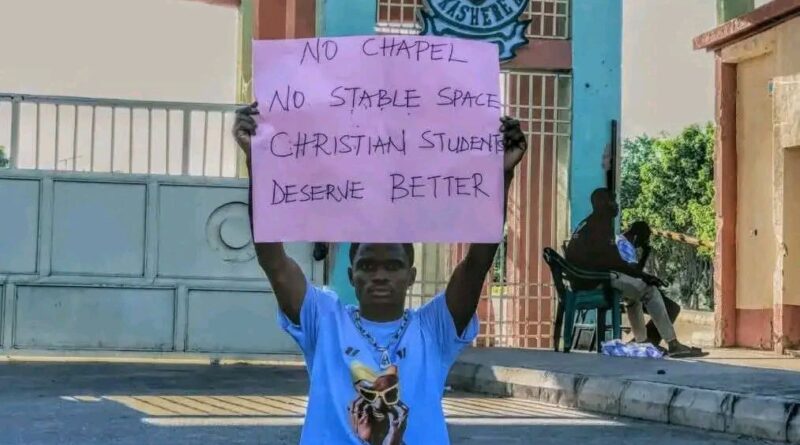
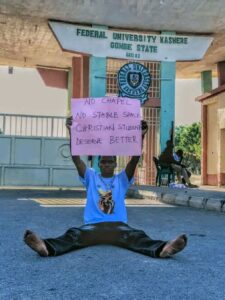
As tensions rose, a student-organized protest surfaced online with the slogan: “No chapel, no stable space Christian students deserve better.” The FCS executive council quickly distanced itself from the protest, urging members to follow established channels and reaffirming their commitment to dialogue.
University officials rejected claims of marginalization. FUK spokesperson Janet Ezekiel said management had provided land for the chapel and even expanded it. “The responsibility of the management is to provide land, and they have done so,” she said. The Dean of Student Affairs, Prof Shuaibu Umaru, echoed this, insisting the campus is not “meant for Muslims alone.”
But Christian leaders argue that the challenge extends beyond paperwork. Pastor Samuel Elebiyo, formerly posted in Kashere, said Christian worship projects across northern institutions often lack institutional support, leading to delays and constant relocation. “They have not enjoyed the goodwill that our Muslim colleagues have,” he said.
Today, Christian students continue to worship in borrowed and temporary venues lecture theatres, the sports complex, and any available hall. They say the issue is not merely about land but the right to worship in a secure, permanent, and dignified space. With no chapel in sight 14 years after the university’s establishment, many feel the disparity between available Muslim and Christian facilities reflects a wider problem of representation and fairness in Nigeria’s public institutions.
Content Credit: Moyosola Oni
Image Credit: Facebook .Com